Email Marketing for Tradies: What to Send, When to Send It, and How to Actually Get Results
Most tradies are stuck paying to rent attention — Google Ads, Meta boosts, and SEO retainers that go quiet the moment you stop spending. Email marketing for tradies flips that model: it's the one channel where you own the relationship, and a well-timed message to a past customer costs you nothing but a few minutes to set up.
Related: Customer Won't Pay? Your Step-by-Step Recovery Guide
Related: 5 Apps That Save Australian Tradies 5+ Hours Weekly
Related: Tax Deductions Australian Service Businesses Miss
The problem isn't that email doesn't work. It's that most tradies have never been shown how to use it properly — so it either never gets started, or it turns into a monthly newsletter that nobody opens and eventually nobody sends. This guide covers exactly what to send, how often, which tools actually work for Australian trade businesses, and how to stay on the right side of the law.
Related: Employee vs Contractor: ATO Rules for Service Businesses
Why Email Marketing for Tradies Is Different to What You're Imagining
When most people hear "email marketing," they picture a retailer blasting a discount code to 50,000 people. That's not what this is.
For a tradie running a plumbing, electrical, HVAC, landscaping, or building business in Australia, email works best as a job-cycle communication tool — messages that follow a customer through a real sequence of events. Quote sent. Job booked. Work completed. Annual service due. That's it.
Related: Win 30% More Jobs: The Quote Follow-Up System
The shift to make is from "newsletter" thinking to lifecycle messaging. Instead of sitting down once a month to write something vaguely interesting, you set up a handful of automated emails that fire at exactly the right moment. Once they're built, they run without you.
Here's why this matters for tradies specifically:
- Your customer list is warm. These are people who've already called you, accepted a quote, or had you in their home. They're not cold leads — they know who you are.
- Your average job value is high. Even one reactivated customer a month — a $600 plumbing call-out, a $1,200 air con service, a $3,500 landscaping job — pays for every tool and hour you put into email, many times over.
- Your competition isn't doing it. Most tradies rely entirely on word of mouth and paid ads. The bar for standing out in someone's inbox is genuinely low.
The 5 Emails That Actually Drive Work (Set These Up First)
You don't need a complicated strategy. If you set up these five emails and nothing else, you'll be ahead of 90% of trade businesses in Australia.
1. The First-Contact / Welcome Email
Triggered when someone submits an enquiry or books for the first time. Its only job is to reassure them they've made a good call.
Keep it short:
- Confirm you've received their enquiry
- Tell them what happens next and when to expect a response
- Include your phone number in case they need to reach you faster
This alone reduces the number of "did you get my message?" calls and starts the relationship on a professional note. If you're using ServiceM8 or Tradify, this can be automated directly from a new job or lead record.
2. Quote Follow-Up (1–2 Emails)
Most lost quotes aren't rejected — they're forgotten. The customer got busy, compared a few options, and never came back to you. A short follow-up email 3–5 days after sending the quote recovers a meaningful percentage of that work.
Email 1 (Day 3–5): "Just checking you received the quote — happy to answer any questions before you decide."
Email 2 (Day 10, optional): Address a common hesitation. "We can usually get started within [X] days of confirmation" or "If the timing doesn't work right now, we can hold the price for 30 days."
This isn't pestering. It's closing the loop. Tools like Fergus and Simpro have built-in quote follow-up reminders, though you can also set this up manually in your email platform.
3. Post-Job Review and Referral Request
The best time to ask for a Google review is within 24–48 hours of finishing a job — when the customer is happy, the work is fresh, and goodwill is at its peak. Most tradies never ask at all, or they ask awkwardly in person and the customer forgets by the time they get home.
An automated email solves this:
- Thank them for the job
- Include a direct link to your Google Business Profile review page (no hunting required)
- Mention briefly that referrals are always appreciated
One extra Google review a week compounds fast. At 52 reviews a year, you'll sit well above most local competitors in search results — and reviews are one of the strongest ranking signals for Google Maps.
4. Maintenance and Seasonal Reminders
This is where repeat work lives, and it's almost entirely untapped by Australian tradies.
If you're an HVAC business, an email in September saying "Summer's coming — book your air con service now before the rush" will book out your October and November. If you do landscaping, a "winter lawn care" email in May keeps you front of mind. Plumbers can send storm-prep or hot water system check reminders.
These emails feel local and relevant because they are. They don't feel like marketing — they feel like a business that actually gives a damn.
5. Reactivation Emails for Quiet Customers
Anyone who's used you in the past 1–3 years but hasn't booked recently is a reactivation candidate. These people already trust you. They just haven't needed you — or they've forgotten to call.
A simple message: "It's been about 12 months since we last serviced your [system/property]. If you're due for a check-up or have anything you've been putting off, we're booking into [month] now."
During slow periods, this single email can fill a week's worth of work from your existing customer base — no ad spend required.
How Often Should Tradies Be Sending Emails?
Less than you're worried about, more than you're currently doing.
Event-driven emails (the five types above) regulate themselves. They only fire when something happens — an enquiry, a completed job, an anniversary date. You're not "emailing every week." You're responding to real moments in the customer relationship.
Broadcast emails (like seasonal promotions or "we're working in your area" messages) work well at once every 4–8 weeks for most trade businesses. Any more than that and you risk fatigue. Any less and customers forget you exist.
The key variable isn't frequency — it's relevance. An email that says "We're doing jobs in Ballarat next week — got anything you need looked at?" will get opened and acted on. A generic "Here's what we've been up to" email will get deleted.
List quality also matters more than list size. A clean list of 300 past customers who recognise your name will outperform a purchased list of 3,000 strangers every single time.
Staying Legal Under the Australian Spam Act (Plain English Version)
Australian email rules are straightforward — but they're enforced, and the penalties are real. The Spam Act 2003 applies to all commercial emails sent from Australian businesses, and the Australian Communications and Media Authority (ACMA) is the body that handles complaints and investigations.
Three things every commercial email must have:
- Consent — either express (they opted in) or inferred (they've done business with you and the email relates to that service)
- Clear identification — your business name and contact details
- A working unsubscribe link — and you must action it within 5 business days
For tradies, inferred consent generally applies when:
- Someone has requested a quote from you
- You've completed paid work for them
- The email you're sending relates directly to that service
This means you can legally follow up a past customer about a maintenance reminder or reactivation offer. What you can't do is add people to a list without their knowledge, ignore unsubscribe requests, or send emails unrelated to the reason they gave you their address.
The ACMA publishes clear guidance at acma.gov.au/spam — worth five minutes of your time before you set anything up.
Which Tools Should Australian Tradies Actually Use?
You don't need a complicated tech stack. Here's a practical breakdown:
For job management + basic email triggers:
- ServiceM8 — popular with sole traders and small crews; has automated client communication built in (from ~$29/month AUD)
- Tradify — solid for quoting and job tracking; pairs well with an external email tool (~$35/month AUD)
- Fergus — strong follow-up features including quote reminders; good for growing trade businesses (~$55/month AUD)
- Simpro — enterprise-level; has built-in CRM and communication tools for larger operations (pricing on request)
For email campaigns and automation:
- Mailchimp — free up to 500 contacts, easy to use, good automation on paid plans
- ActiveCampaign — more powerful segmentation and automation; from ~$29/month AUD
- Kit (formerly ConvertKit) — clean and simple; good if you want to keep it straightforward
For accounting integration:
- Xero — most popular accounting software for Australian tradies; integrates with most of the above, which means your customer data stays connected across quoting, invoicing, and communication
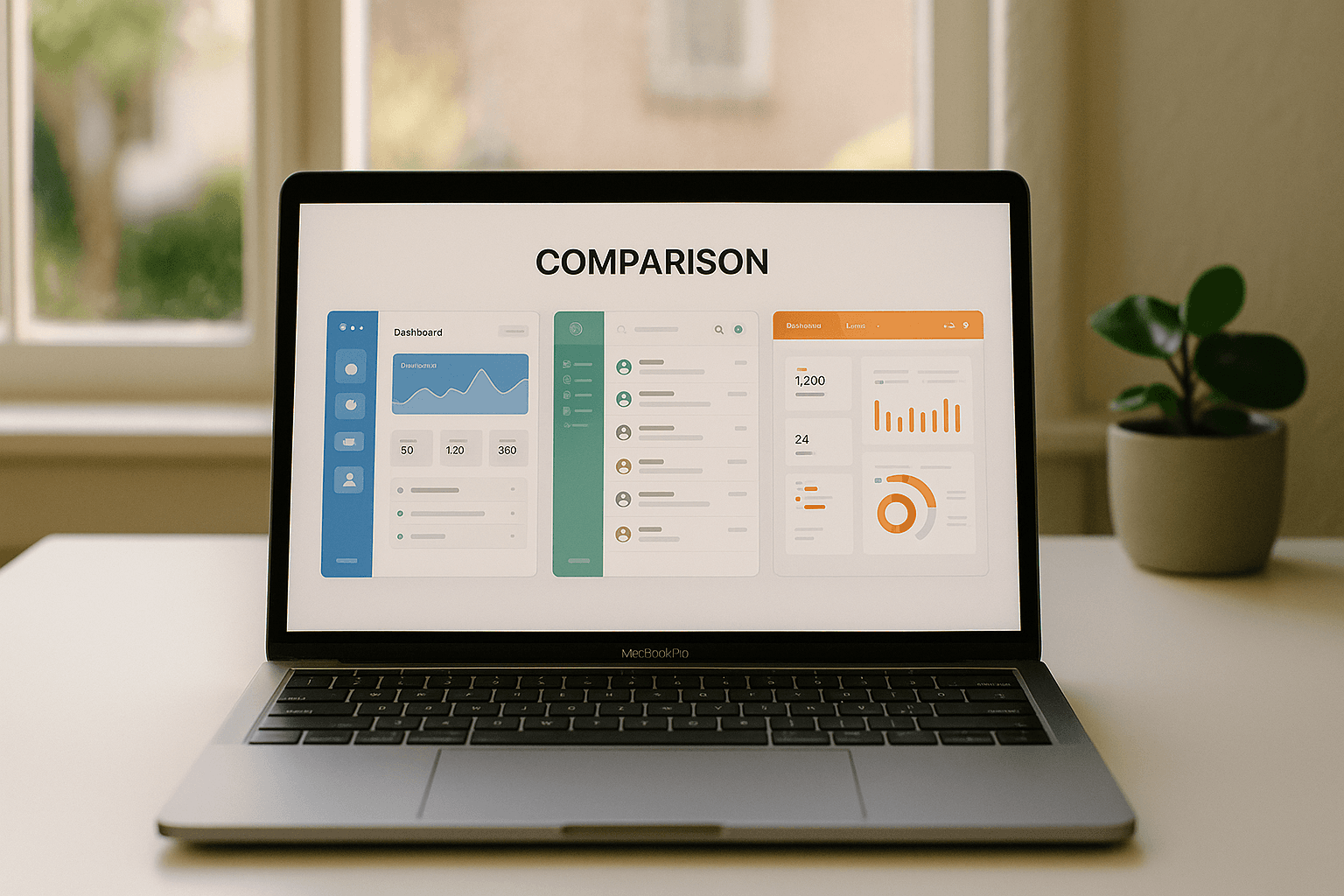
The best setup is usually your job management software handling transactional emails (quote sent, job confirmed, invoice issued) and a dedicated email platform like Mailchimp or ActiveCampaign handling campaigns, seasonal broadcasts, and reactivation sequences.
Segmentation: The Difference Between Helpful and Annoying
The fastest way to improve email performance without writing better emails is to stop sending the same message to everyone.
Simple segmentation for tradies:
- By service type — a plumbing customer doesn't need your electrical promotions
- By suburb or region — "we're working in your area next week" only makes sense if it's actually their area
- By last job date — someone you worked for six months ago needs a different message than someone you last saw three years ago
- By job value — high-value customers might warrant a more personalised follow-up
Most email platforms make basic segmentation easy. In Mailchimp, for example, you can create segments based on tags you apply to contacts — just tag customers by service type when you import them and you're already ahead of most businesses.
AI Time Savings Calculator — Enter your current admin hours and see exactly how much time (and money) AI automation could save your business each week. Find out how much time AI saves →
Conclusion: Email Marketing for Tradies Is a System, Not a Chore
The tradies who get the most out of email aren't writing newsletters every month. They're building a small set of smart, automated messages that work in the background — following up quotes, requesting reviews, reminding customers it's time to book, and reactivating people who've gone quiet.
Email marketing for tradies works because your customer list is already warm, your average job value is high, and your competitors aren't doing it. Set up five automations, stay consistent with a seasonal broadcast every few weeks, keep it legal, and measure what actually matters: bookings, quote acceptance rates, and reviews — not open rates.
The next step is simple: export your last two years of customer contacts from Xero, ServiceM8, or whatever you're using to manage jobs. That list is the asset. Once you've got it, even a basic Mailchimp setup can start generating repeat work within the first month.
If you want help building a system that actually runs without you, get in touch with the team at ServiceScale.