ServiceM8 vs Tradify vs Fergus: Which Fits Your Trade?
 Pat FongFounder, ServiceScalePublished 16 April 2026 · Updated 13 July 2026 · 11 min read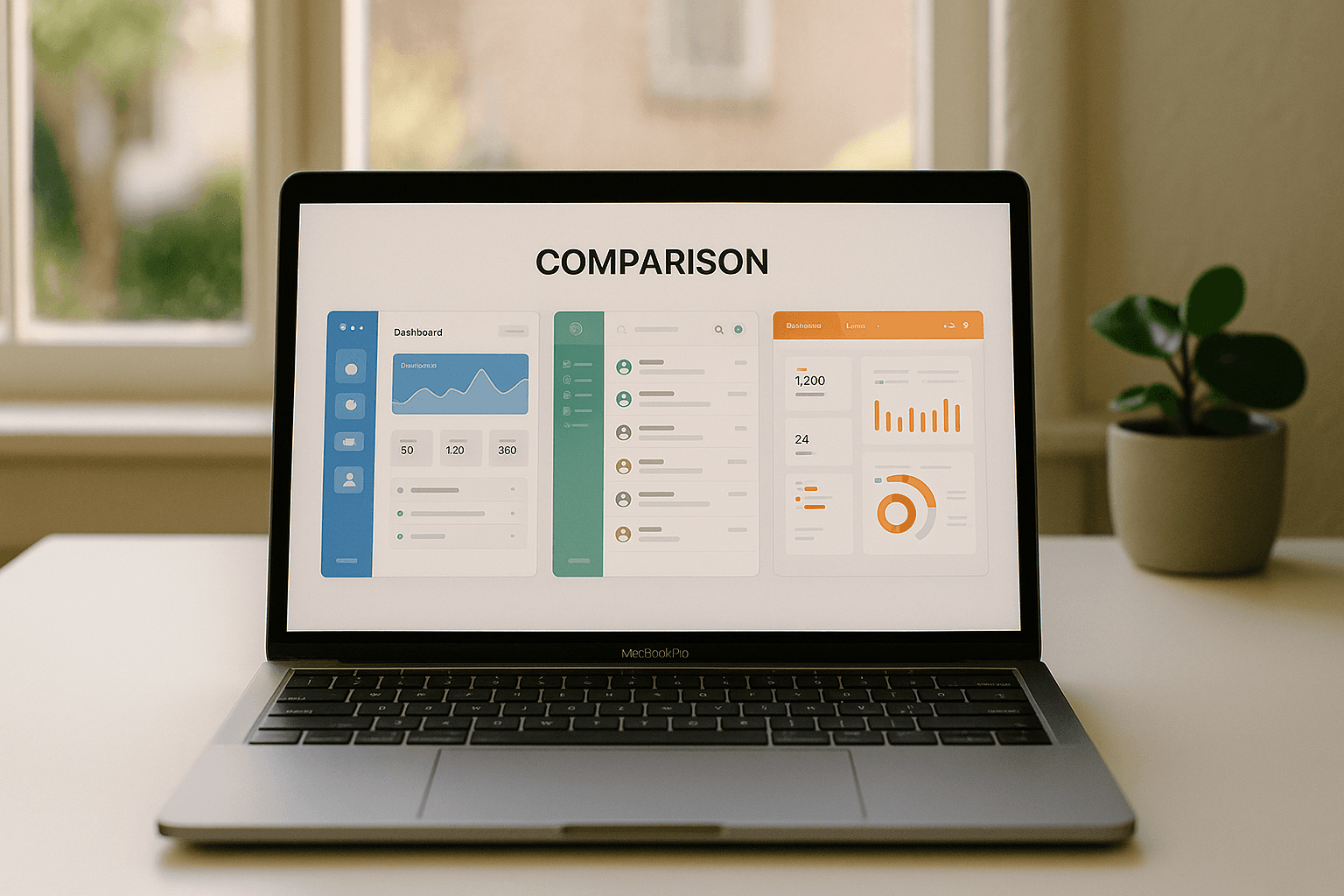
Key takeaways
- Choosing the wrong job management software costs you twice - once for the subscription, then again when you outgrow it and have to migrate everything mid-job.
- These three tools are not interchangeable.
- Subscription fees are the visible part of the cost.
- Most comparison articles list every feature on the spec sheet.
- The honest answer to "which platform is best" is that it depends entirely on your trade type and how your jobs run.
Choosing the wrong job management software costs you twice - once for the subscription, then again when you outgrow it and have to migrate everything mid-job. This comparison covers the three platforms dominating the Australian market right now: ServiceM8, Tradify, and Fergus. Not a feature list. A straight answer on which one suits your trade, your team size, and how your jobs actually run day-to-day.
Where Australian Tradies Lose Time Every Week
Related: Before & After Posts: Instagram Strategy for Tradies
Every hour spent on those tasks is an hour not spent on tools - or getting home before dark. The right job management platform eliminates most of them. The wrong one adds a new set of headaches on top of the old ones.
What Each Platform Is Actually Built For
These three tools are not interchangeable. They were designed with different businesses in mind, and that philosophy shows up in everything from the interface to the pricing structure.
Related: Automation or AI: The Single Question That Reveals What Your Business Needs
ServiceM8 is Australian-built and mobile-first. It was designed for tradies who are on the tools all day and need to capture job details, photos, signatures, and invoices fast - ideally in under a minute. The interface is clean, the learning curve is low, and most actions take two or three taps on your phone. It's particularly popular with sole traders and small teams in plumbing, electrical, and carpentry. Because it's built in Australia, support runs in Australian time zones and GST invoicing is handled correctly out of the box.
Tradify is more desktop-oriented and built around detailed job costing, project tracking, and reporting. If you're managing subcontractors, tracking materials against a budget, or running complex multi-stage projects, Tradify gives you visibility that ServiceM8 simply can't match. It integrates well with both Xero and MYOB - the two accounting platforms most widely used by Australian tradies - and that integration can save a couple of hours a week on end-of-month reconciliation.
Fergus sits in the middle. It's an all-in-one platform with strong CRM functionality, solid mobile and desktop access, and a polished interface. It suits service-based trades like HVAC and refrigeration where customer relationships and recurring maintenance contracts are central to the business model. Fergus handles quoting, scheduling, invoicing, and job history under one roof without feeling bloated.
ServiceM8 vs Tradify vs Fergus: Side-by-Side
ServiceM8
$25–$75/user/month
- ·Mobile-first interface
- ·Fast quote and invoice creation
- ·Photo and signature capture
- ·GST-ready, Australian-built
- ·Xero integration
Lowest learning curve
Best mobile experience
Fastest to get operational
Australian support team
Limited job costing
Basic CRM
Not ideal for complex projects
Best for sole traders and small teams who live on the tools and need speed over complexity.
Tradify
$40–$120/user/month
- ·Advanced job costing
- ·Subcontractor management
- ·Xero and MYOB integration
- ·Detailed project reporting
- ·Multi-stage job tracking
Strongest job costing
Best for builders and multi-trade
Excellent accounting integration
Steeper learning curve
Weaker mobile experience
Longer setup time
Best for builders, project managers, and larger teams running complex, multi-stage jobs.
Fergus
$50–$150/user/month
- ·Built-in CRM
- ·Recurring maintenance contracts
- ·Strong mobile and desktop
- ·Quote-to-invoice workflow
- ·Xero integration
Best CRM of the three
Polished interface
Strong onboarding support
Good for service trades
Most expensive entry point
NZ-built (minor timezone considerations)
Overkill for simple operations
Best for HVAC, refrigeration, and service trades where customer relationships and recurring work drive the business.
Pricing: What You'll Actually Pay
Subscription fees are the visible part of the cost. The hidden costs - setup, training, data migration, and lost productivity during the switchover - are where most tradies get caught out.
61%
of small trade businesses underestimate software switching costs by more than 40%
MYOB Business Monitor 2023
Budget the full picture - subscription plus setup - before you commit to any platform.
For a three-person team, here's what the first year realistically looks like across all three platforms:
ServiceM8 at the mid-tier plan works out to roughly $2,700 in annual subscription costs for three users. Most small teams are operational within two to four weeks. Training is straightforward - budget around five hours per person. Total first-year cost for a three-person team: $4,500–$6,000, including setup, training time, and data cleanup.
Tradify runs higher at $40–$120 per user per month. The platform is more powerful, but that power comes with complexity. Implementation typically takes four to eight weeks. If you're migrating from spreadsheets or a basic app, expect to spend 20–40 hours on data cleaning before you're fully operational. Total first-year cost for a three-person team: $6,500–$10,000.
Fergus is the premium end of the market at $50–$150 per user per month. However, entry-level plans include more features than comparable ServiceM8 or Tradify tiers, so the per-feature cost is reasonable. Fergus provides stronger onboarding support, which helps offset the longer three-to-six-week setup period. Total first-year cost for a three-person team: $7,500–$12,000.
Budget Beyond the Subscription
A five-person team switching from spreadsheets should realistically set aside $3,000–$5,000 in non-subscription costs for the first year - mostly your own time and any bookkeeper or admin help you bring in to clean up customer and job data before migration. Skipping this step is the single most common reason software rollouts fail.
The Features That Actually Matter Day-to-Day
Most comparison articles list every feature on the spec sheet. This section covers only the ones that affect your week.
Quoting and Estimating: ServiceM8 generates quotes quickly from templates and sends them as PDFs via email or SMS. You can attach photos, tick off line items, and get digital acceptance on the spot. Fast and clean for straightforward jobs. It struggles with complex, multi-stage estimates. Tradify handles detailed quotes with labour, materials, and markup tracked separately, then compares actual costs to estimates as the job progresses - genuinely useful for builders running commercial fit-outs. Fergus sits between the two, with solid margin visibility and clean quote-to-invoice conversion.
Scheduling: ServiceM8's drag-and-drop calendar is simple and works well on mobile. Tradify's scheduling is more powerful but less intuitive on a phone screen. Fergus offers the best of both - a clean calendar that works well on desktop and mobile, with colour-coded job status that makes it easy to see where your team is at a glance.
Invoicing and Payments: All three platforms integrate with Xero. ServiceM8 and Fergus both allow you to invoice on-site the moment the job is done, which dramatically reduces the time between finishing work and getting paid. Tradify's invoicing is solid but more suited to end-of-project billing than on-the-spot collection.
CRM and Customer History: Fergus is the clear winner here. Customer profiles include full job history, recurring maintenance schedules, notes, and contact details. ServiceM8's customer management is functional but basic. Tradify's is the weakest of the three - fine for project-based work where you're not necessarily returning to the same client repeatedly.
Which Trade Are You? Here's Your Answer
The honest answer to "which platform is best" is that it depends entirely on your trade type and how your jobs run.
graph TD\n A[What type of work do you mostly do?] --> B{Repeat service calls\nand maintenance?}\n A --> C{Complex multi-stage\nprojects?}\n A --> D{Quick single-visit\njobs?}\n B -->|Yes| E[Fergus - strong CRM\nand recurring contracts]\n C -->|Yes| F[Tradify - job costing\nand project tracking]\n D -->|Yes| G[ServiceM8 - fast\nmobile invoicing]If you're a plumber, sparkie, or carpenter doing mostly single-visit residential jobs, ServiceM8 will get you productive fastest and cost you the least to run. If you're a builder or project manager handling multi-stage commercial work with subcontractors and detailed budgets, Tradify gives you the visibility you need. If you're in HVAC, refrigeration, or any service trade where recurring maintenance contracts and long-term customer relationships drive your revenue, Fergus is built for exactly that.
How to Roll Out Your Chosen Platform Without Losing Your Mind
The setup phase is where most tradies stall. They sign up, get overwhelmed, and end up paying for a subscription they're not using. This timeline is realistic for a three-to-five person team starting from scratch.
90-Day Software Rollout Plan
Get the basics right before you add complexity
Export all customer and job data from your current system (even if it's a spreadsheet). Clean up duplicates, standardise address formats, and confirm your customer list is accurate. Set up your account, configure your trade rates and GST settings, and run your first three real jobs through the new system. Don't try to use every feature yet.
Connect your accounting and get the team on board
Link the platform to Xero or MYOB and reconcile your first month of invoices through the integration. Train any staff or subcontractors - budget five hours per person. Set up your quote templates and job categories to match how you actually describe work to clients. Start using the scheduling calendar as your primary workflow tool.
Find the time savings and lock them in
Review which manual tasks you're still doing outside the platform and fix that. Set up recurring job templates if you do maintenance work. Configure automated invoice reminders for overdue accounts. Run your first full month-end reconciliation through the integration and note where it still takes manual effort - that's your next optimisation target.
Setting Up Your Job Management Stack
Once you've picked your platform, the setup sequence matters. Rushing this is how you end up with messy data and a team that ignores the software.
4 Steps to a Clean Software Setup
Clean your data first
Export every customer, job, and invoice record from your current system before you touch the new one. Remove duplicates, fix address formats, and make sure every contact has a current phone number and email. Migrating dirty data creates problems that take months to fix.
Configure your rates and templates
Set up your standard labour rates, common job types, and quote templates before you log a single job. This is the work that makes quoting fast later. A plumber might have 20–30 common job types - build them all out in week one.
Run three real jobs as a pilot
Pick three upcoming jobs and run them entirely through the new platform - quote, schedule, complete, invoice. Don't use the old system as a backup. This forces you to find the gaps in your setup before they affect your whole business.
Connect your accounting and test the sync
Link to Xero or MYOB and push through a test invoice. Confirm the GST coding is correct, that payment status syncs back to the job platform, and that your chart of accounts is mapped properly. Do this in week two, not week eight.
Before You Decide: Try All Three
All three platforms offer free trials. ServiceM8 gives you 14 days, Tradify gives you 14 days, and Fergus offers a 14-day trial as well. The only way to know which interface suits how you actually work is to log a few real jobs in each one.
Don't make the decision based on a demo. Demos show you the best-case scenario. Your real test is whether you can create a quote, schedule a job, complete it, and send an invoice in under five minutes without reading a help article.
The ServiceScale newsletter
Get practical tips for your trade business
Free guides, tools, and insights, delivered when we publish something worth reading.
No spam. Unsubscribe anytime. We only email when we've got something worth your time.
The platforms above are tools. They save time only if your team actually uses them. The ones that get abandoned are almost always the ones that were chosen based on features rather than fit - or rolled out without a proper setup process. For even more time savings, consider exploring AI for tradies to automate repetitive tasks beyond what traditional job management platforms can handle.
The Bottom Line
ServiceM8, Tradify, and Fergus are all solid platforms. None of them is universally the best. The right one depends on your trade, your team size, and whether your work is project-based or repeat-service based. Pick the one that matches how your jobs actually run, budget for the full setup cost (not just the subscription), and give yourself 90 days to get properly operational before you judge whether it's working.
If you're still unsure which platform suits your specific business setup, book a free call to discuss your workflow and get personalised recommendations.
ServiceM8 suits mobile-first sole traders and small teams doing quick turnaround jobs. Tradify suits builders and project managers who need detailed job costing and subcontractor tracking. Fergus suits service trades where recurring maintenance contracts and long-term customer relationships are the business model. Try all three for free before you commit - and budget $3,000–$5,000 beyond the subscription for a proper first-year setup.
Related guides
- AI Automation for Trade Businesses: The 2026 Playbook — the full guide
- Voice Assistants For Tradies
- 5 Apps That Save Australian Tradies 5+ Hours Weekly
Want a system that runs without you? See our AI coaching for trade businesses.
<!--/campaign-links-->FREE GUIDE · AI TOOLS CHEAT SHEET
The 6 AI tools every tradie should know.
The short list we actually recommend to clients. Setup steps, real costs, honest verdicts. Save 5+ hours a week.
Related guides